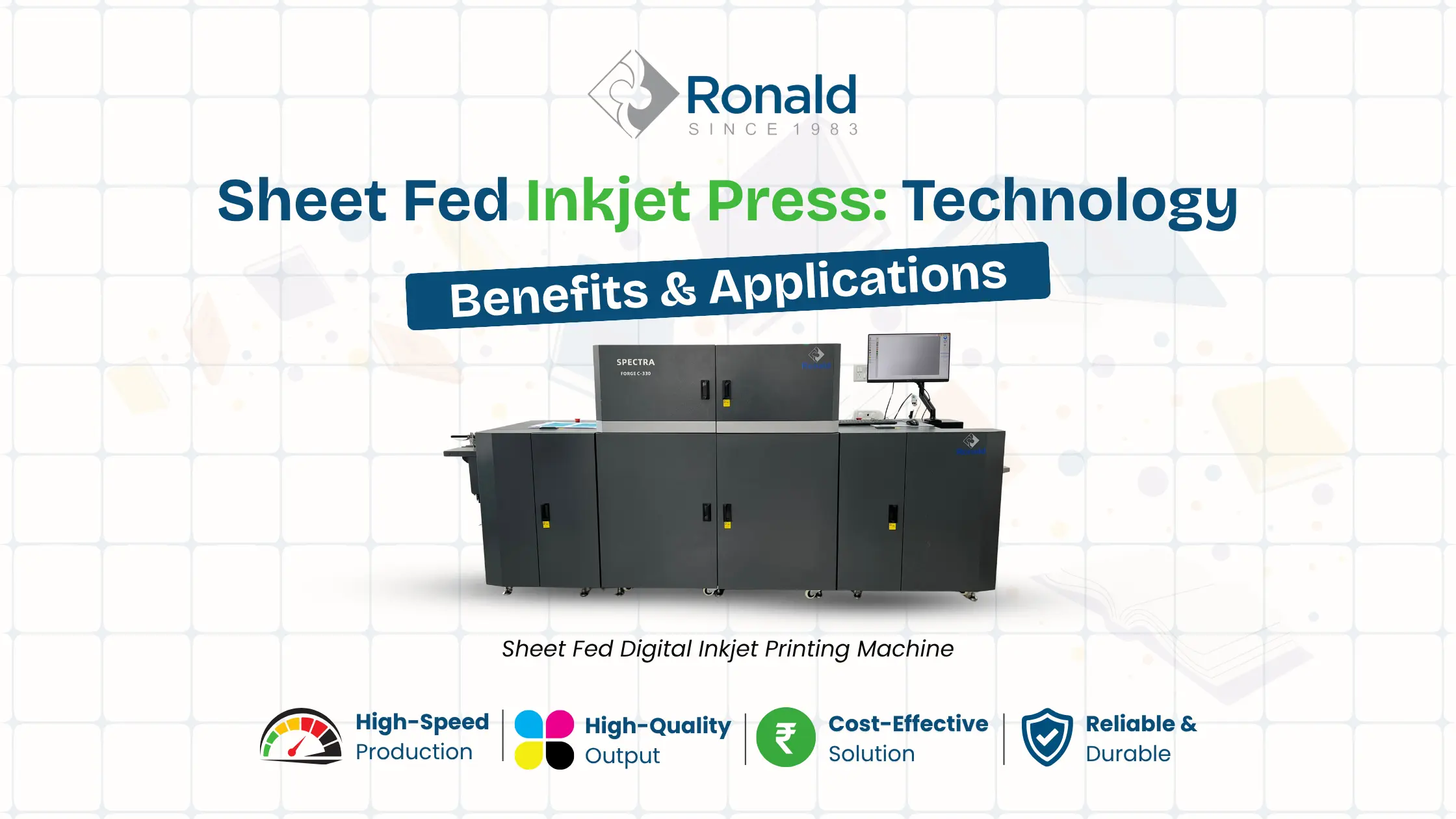
Sheet Fed Inkjet Press: Technology, Benefits & Applications The printing industry is changing rapidly as businesses look for faster, more...
October 1, 2026
The printing industry has changed a lot over the years. From Johannes Gutenberg’s movable type to today’s digital presses, printing technology continues to evolve to meet business needs.
Today, companies want high print quality, faster production, and affordable printing options. They also need flexibility to handle many printing projects, from short marketing jobs to large commercial runs.
Because of these demands, two main printing technologies stand out today:
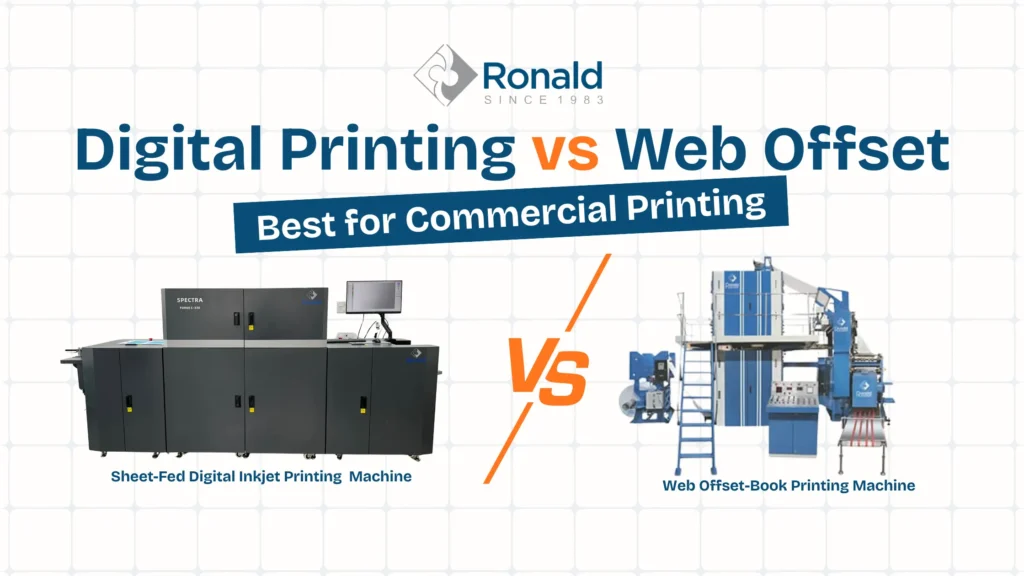
Various kinds of printing machines exist, each tailored for particular purposes. Understanding when to use digital printing or web offset printing can help businesses make better choices for their needs.
A Digital Printing Machine is a modern system that prints directly from digital files without using traditional printing plates.
Digital presses do not use the traditional plate-based method. Instead, they use inkjet or laser technology to put ink directly on paper. This skips the plate-making step and cuts down setup time.
Thanks to this efficient workflow, digital printing is perfect for short runs, personalized printing, and quick projects.
These features make digital printing one of the most flexible options in modern commercial printing.
Digital printing machines are widely used for:
For businesses handling small or urgent printing projects, digital printing is often the most cost-effective choice.
Recent years have seen modern digital presses become much more powerful and efficient. Many printing companies now use advanced digital systems that combine speed, flexibility, and consistent print quality.
For example, advanced inkjet systems like Spectra Forge digital inkjet printing machines support modern printing operations. These machines use high-performance inkjet technology, reduce setup time, and efficiently handle various print job media types.
Modern digital printing machines help companies keep up with the demand for quicker and more flexible print solutions. They offer features like variable data printing, fast production speeds, and support for many paper types.
Web Offset Printing is a traditional yet efficient printing method designed for producing large quantities of prints.
In this process, ink transfers from metal plates to a rubber blanket, then onto paper. Unlike digital printing, offset printing uses continuous rolls of paper instead of individual sheets.
This system allows printing presses to produce extremely large print runs at rapid speeds.
Because of its efficiency in mass production, offset printing remains a critical technology in the commercial printing industry.
Web offset printing is commonly used for:
When businesses need to print large quantities, offset printing is typically more cost-effective than digital printing.
Knowing the differences between these technologies helps businesses select the right printing method for their projects.
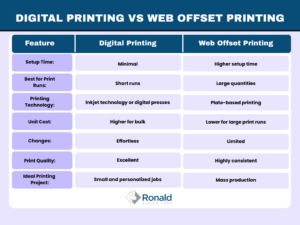
This comparison clearly illustrates the differences between offset printing and digital printing.
1. Faster Setup Time
Digital printing machines need minimal preparation, letting jobs start quickly and reducing delays.
2. Perfect for Short Runs
Digital printing works well for short runs, especially when you need only a few hundred copies.
3. Personalized Printing
With variable data printing, each printed piece can include unique information like customer names or addresses.
4. Reduced Waste
Since there is no plate setup, digital printing creates less material waste during production.
5. Flexible Paper Types
Digital printing machines can handle various paper types, making them suitable for different printing projects.
1. Best for Large Quantities
Offset printing is highly cost-effective for producing thousands or millions of copies.
2. Lower Printed Cost per Unit
While setup requires plates, the printed cost per unit becomes much lower for large runs.
3. Superior Print Quality
Offset printing offers consistent print quality, which is important for magazines and catalogs.
4. High-Speed Production
Large printing presses can produce thousands of prints per hour using offset technology.
5. Reliable Print Method
Offset printing remains one of the most trusted methods for mass production.
Choosing the right technology depends on the specific printing project.
Choose Digital Printing If:
Choose Web Offset Printing If:
Many modern printing businesses use both digital and offset technologies to manage different types of projects efficiently.
As printing technology evolves, digital printing machines are becoming faster and more efficient. Many companies are adopting hybrid workflows that combine digital and offset printing.
Advanced solutions like Spectra Forge digital printing systems help businesses handle short runs, personalized projects, and fast turnarounds.
These systems provide the flexibility of digital printing while meeting the demands of modern printing operations.
Both Digital Printing Machines and Web Offset Printing play essential roles in commercial printing.
Digital printing provides speed, flexibility, and Personalization, making it ideal for short runs and personalized projects.
Web offset printing offers high production speed and lower unit costs, making it the best choice for large-scale printing projects.
Understanding the difference between digital and web offset printing helps businesses choose the best method for their needs.
The main difference lies in the printing process. Digital printing uses inkjet technology or digital presses to print directly from digital files.
Web offset printing uses metal plates and a rubber blanket to transfer ink onto paper. Digital printing works best for short runs, while offset printing is better for large quantities.
The most budget-friendly printing approach depends on the number of copies. Digital printing costs less for small batches.
Web offset printing becomes more affordable for high-volume orders.
This is because the unit cost drops as volume grows.
Digital printing can manage medium print runs, but it is generally more suitable for short runs and customized projects. For enormous volumes, businesses usually prefer web offset printing.
Digital printing machines deliver numerous advantages. They feature rapid setup times.
They enable variable data printing. They handle a wide range of paper types. They also deliver quick turnaround times for print orders.
Printers often use web offset printing for newspapers, magazines, catalogs, and high-volume books. It provides consistent print quality and lowers unit costs.
Yes. Many modern printing businesses use both digital presses and web offset machines. Digital printing handles short runs and personalized jobs, while offset printing focuses on large runs and mass production.
Sheet Fed Inkjet Press: Technology, Benefits & Applications The printing industry is changing rapidly as businesses look for faster, more...
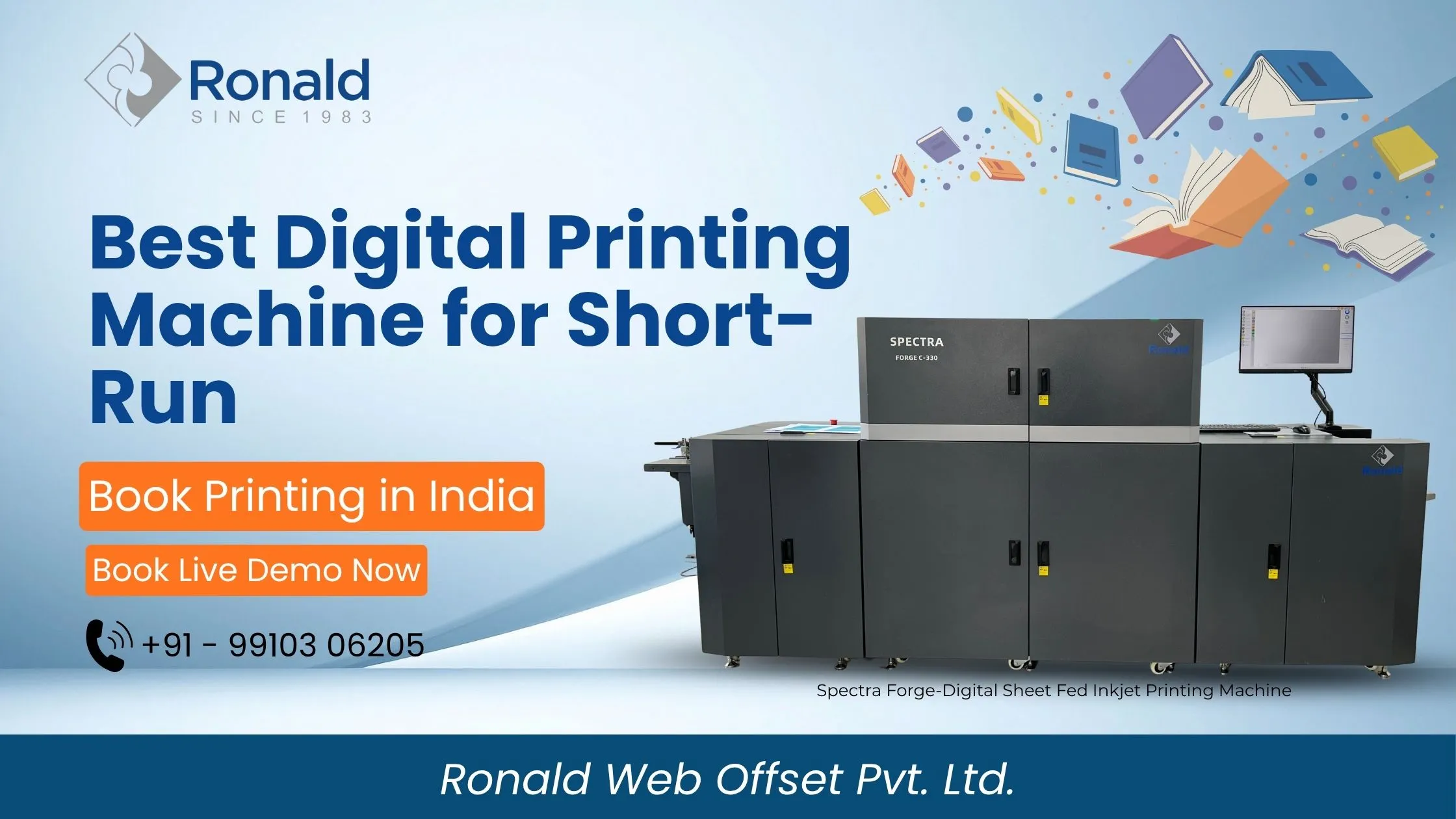
Best Digital Printing Machine for Short-Run Book Printing in India Digital printing machine for short-run books in India can help...
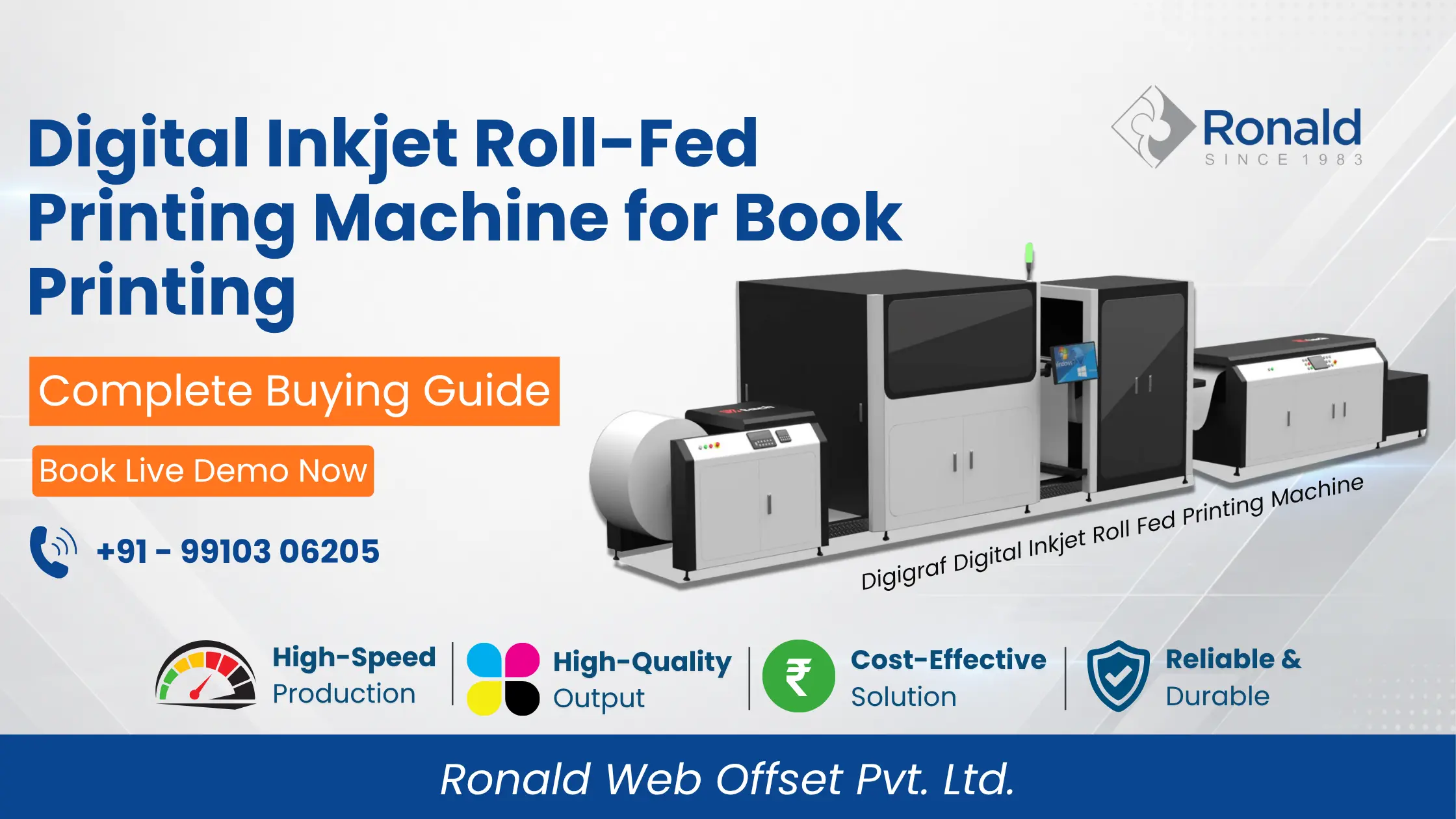
Digital Inkjet Roll Fed Printing for Book Printing A Digital Inkjet Roll Fed Printing Machine for Book Printing can help...
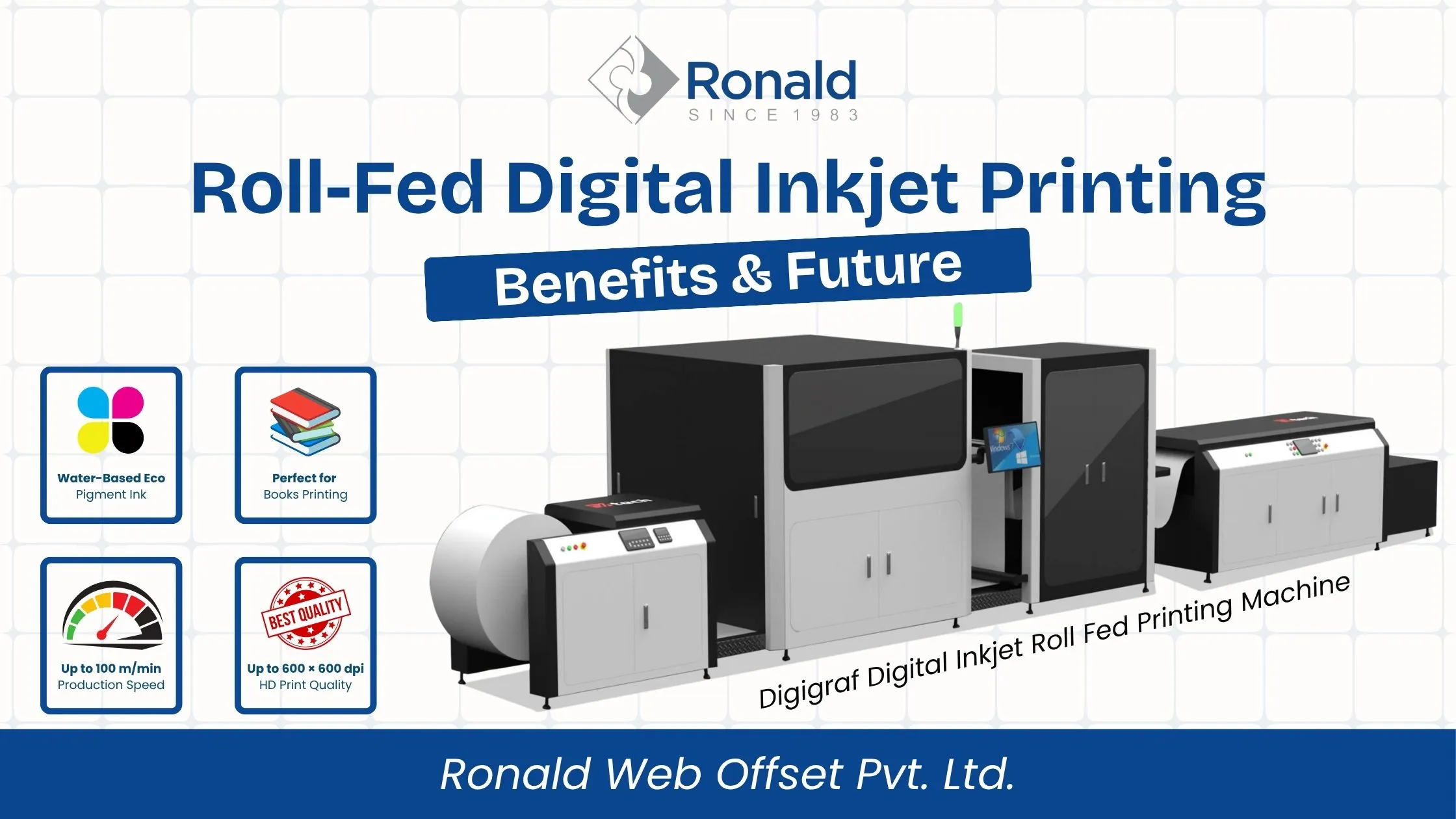
Roll-Fed Digital Inkjet Printing: Benefits & Future Introduction The printing industry is changing fast. Customers want better quality, faster delivery,...