Sheet Fed Inkjet Press: Technology, Benefits & Applications The printing industry is changing rapidly as businesses look for faster, more...
October 1, 2026
The printing industry is changing fast. Customers want better quality, faster delivery, and more flexible print options.
Printers also need to reduce waste, save time, and handle different types of jobs.
This is where roll-fed digital inkjet printing can help.
Roll-fed digital printing uses paper from a continuous roll. The machine prints directly from a digital file. This removes the need for traditional printing plates and can make job changes much faster.
Today, this technology is finding applications in book printing, publishing, transactional documents, educational printing, and more.
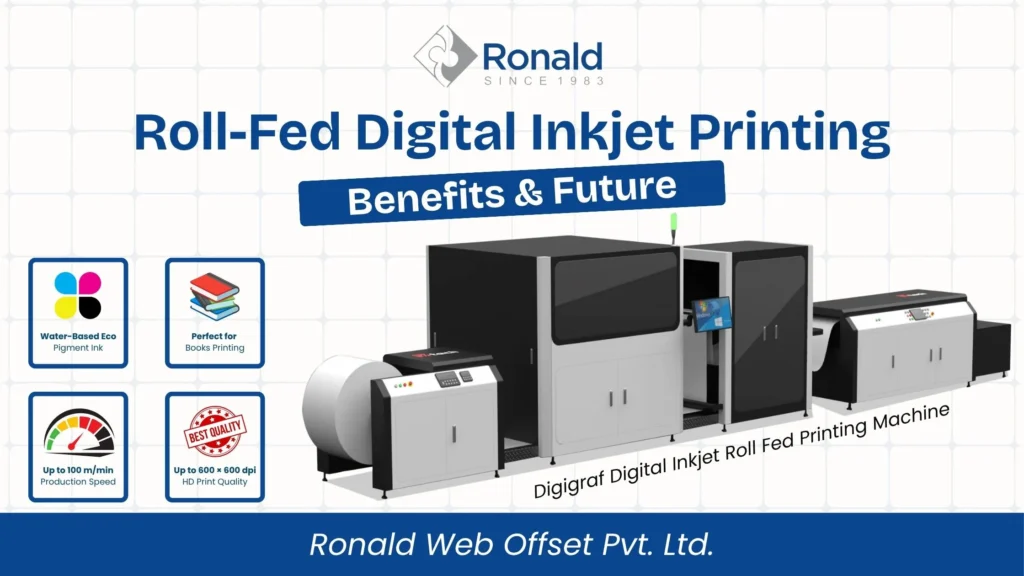
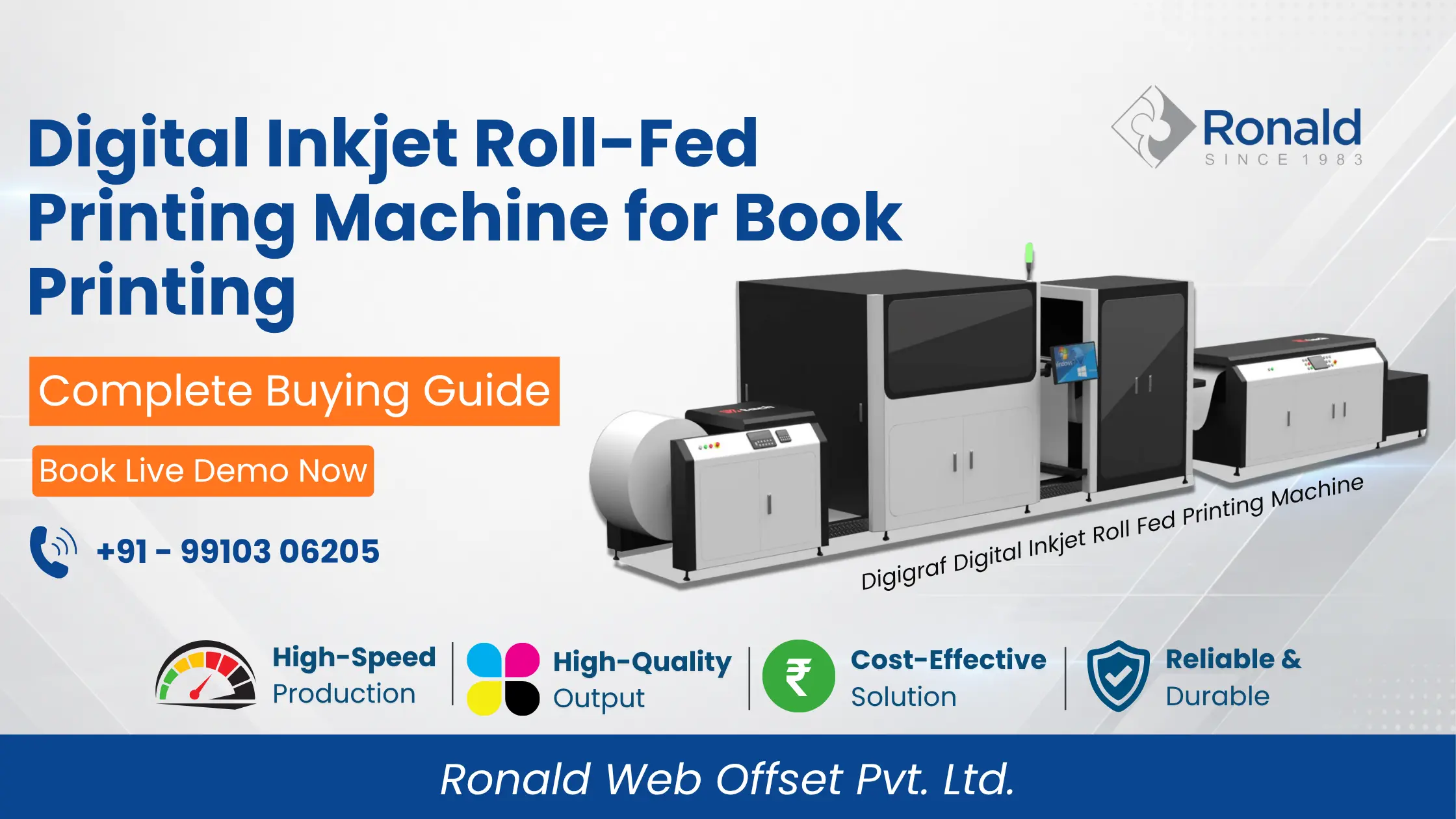
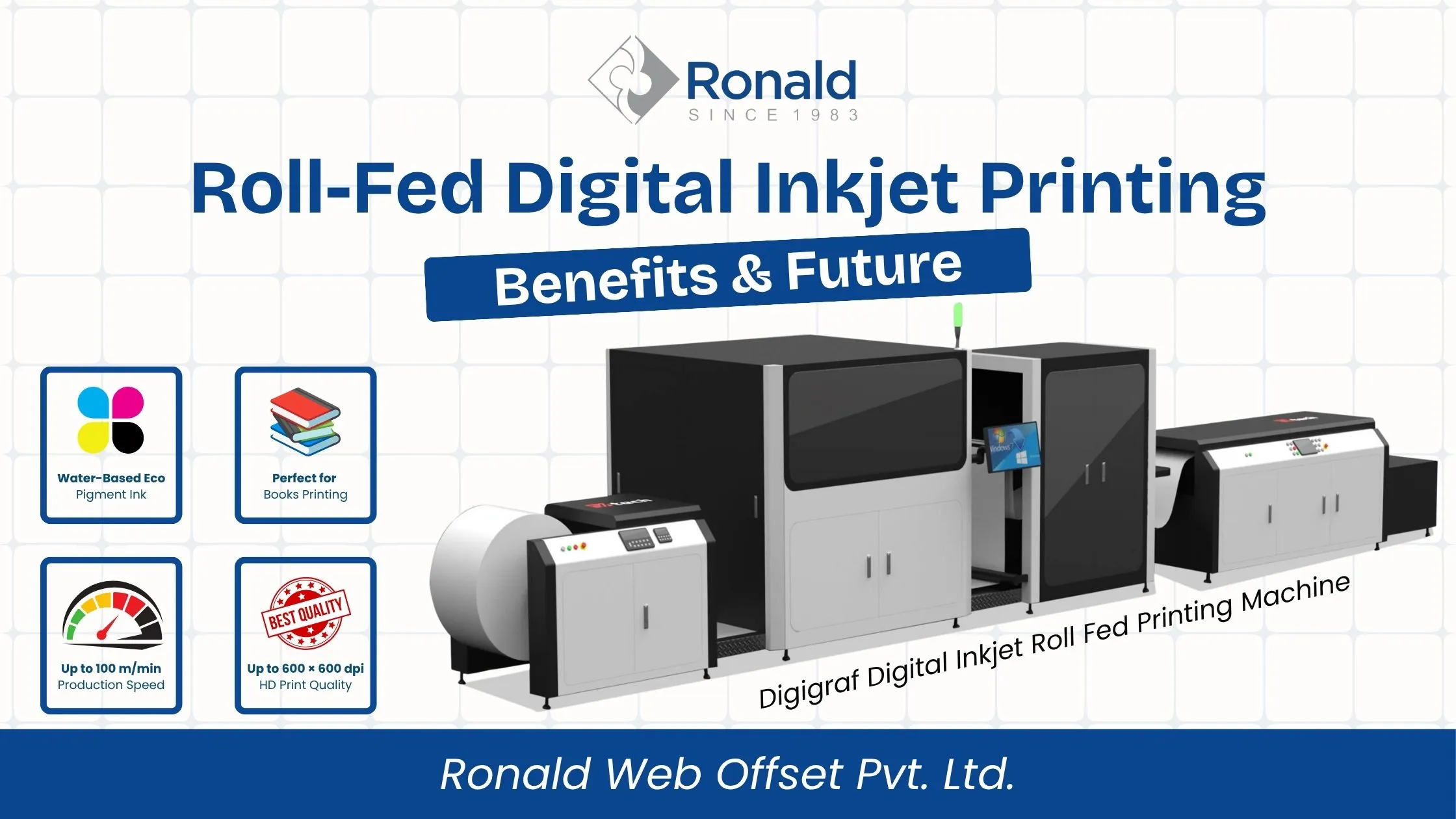
One example is the DIGIGRAF Digital Inkjet Roll Fed Printing Machine by Ronald Web Offset.
Roll-fed digital inkjet printing uses a large paper roll instead of individual sheets.
The paper moves through the machine as a continuous web. Digital printheads then print the required content directly onto the paper.
Each job does not require traditional printing plates.
This makes the process simple and flexible. Printers can send a new digital file to the machine and start another job with less setup.
The basic process is simple:
The operator loads the paper roll onto the machine.
The required print file goes directly to the digital printing system.
The paper moves through the machine while the inkjet printheads print the content.
The printed paper passes through the drying system.
The printed roll can then move to cutting, folding, binding, or other finishing processes.
This workflow helps printers manage different jobs with less setup time.
Roll-fed printing uses a continuous paper roll. This allows the machine to keep printing without stopping to load individual sheets.
This makes it useful for large print jobs and regular production.
DIGIGRAF supports high-speed, continuous digital printing.
Traditional offset printing needs plates before printing can begin.
Digital inkjet printing works directly from digital files. This removes the need for traditional plates.
As a result, printers can prepare jobs faster and move between different jobs more easily.
Print businesses often handle many different jobs in one day.
With digital printing, operators can change the digital file and start a new job without preparing a new set of plates.
This can save both time and effort.
Not every customer needs the same quantity.
One customer may need a few thousand copies, while another may need a much larger order.
Digital printing gives printers more flexibility to handle different print quantities.
Digital printing can also print different information on each page.
For example, printers can use variable data for:
This makes digital inkjet printing useful for documents that need different information on every copy.
Traditional printing can require material during the setup stage.
Digital printing requires minimal pre-press setup before production begins. This helps cut paper waste, particularly when printers run numerous short jobs.
The actual amount of waste depends on the machine, paper, ink, job size, and finishing process.
Modern inkjet printing systems can deliver consistent results throughout a print job.
Good print quality is important for books, manuals, reports, catalogues, educational material, and other commercial applications.
DIGIGRAF uses industrial piezoelectric inkjet printhead technology and supports up to 600 × 600 DPI resolution.
Roll-fed digital inkjet printing can support many different print applications.
Publishers can use digital inkjet printing for:
Digital printing is especially useful when publishers need flexible quantities or faster job changes.
Educational publishers often update books and learning material.
Digital printing makes it easier to produce updated content without preparing new printing plates for every version.
Banks, insurance companies, and other businesses produce large amounts of customer documents.
These may include:
Variable data printing makes digital inkjet technology suitable for such applications.
Companies regularly need manuals, reports, forms, training material, and other documents.
Roll-fed digital printing can help produce these materials quickly and efficiently.
Both digital and offset printing have their own advantages.
Offset printing performs extremely well for large print runs that require printing the same content in high quantities.
Digital inkjet printing offers more flexibility. It can be useful when printers need quick job changes, variable data, personalized content, or different print quantities.
The right choice depends on several factors:
For many printing businesses, both technologies can work together.
Printers can use offset for large standard jobs and digital printing for flexible or variable jobs.
Modern customers want faster delivery and more flexible printing.
At the same time, printers need to control costs and make better use of their machines.
Roll-fed digital inkjet printing brings together continuous paper feeding and digital printing.
This combination can help printers handle different jobs while maintaining a smooth production process.
The objective isn’t just to print more quickly.
The goal is to produce the right quantity, with the right content, at the right time.
Digital printing technology continues to improve.
Future developments will focus on areas such as:
As more businesses want shorter print runs, personal content, and faster delivery, digital inkjet printing can become more important.
Digital inkjet printing can effectively address these requirements.
DIGIGRAF by Ronald Web Offset is designed for businesses looking for a continuous digital printing solution.
The machine is suitable for applications such as:
DIGIGRAF supports roll-fed production and uses industrial piezoelectric inkjet printheads.
The machine offers up to 600 × 600 DPI resolution and can support multiple colour configurations.
The standard configuration supports roll-fed output up to 800 mm and printing speeds of up to 176 A4 pages per minute.
It can handle paper types such as:
The supported paper range is 40–180 GSM, depending on the application and machine configuration.
Roll-fed digital inkjet printing is becoming an important technology for modern print businesses.
It combines the flexibility of digital printing with the benefits of continuous roll-fed production.
It can help printers handle books, educational material, commercial documents, transactional printing, catalogues, and many other applications.
Before buying a digital printing machine, printers should look beyond speed.
They should also check print quality, paper support, ink usage, job change time, maintenance, finishing, and total production cost.
With personalized printing and print-on-demand growing, roll-fed digital inkjet printing will become more important.
Faster delivery will also push its use.
This will help shape the future of commercial printing.
Roll-fed digital inkjet printing uses a continuous paper roll. The machine prints directly from a digital file using inkjet technology.
Roll-fed digital inkjet printing offers several key benefits:
Yes. Roll-fed digital inkjet printing works well for textbooks, educational books, manuals, novels, and many other books.
Variable data printing allows different information to appear on different copies of the same job. This can include names, addresses, QR codes, barcodes, and other customer information.
Not Always. Both technologies have their own advantages. The right choice depends on print volume, job type, production time, personalization, and total cost.
Yes. Continuous paper feeding makes roll-fed digital printing suitable for many high-volume print applications.
Want to learn more about the DIGIGRAF Digital Inkjet Roll Fed Printing Machine?
Visit the official product page to explore its features, applications, and technical details.
Phone: +91 99103 06205 Email: info@ronaldweboffset.com
Sheet Fed Inkjet Press: Technology, Benefits & Applications The printing industry is changing rapidly as businesses look for faster, more...
Best Digital Printing Machine for Short-Run Book Printing in India Digital printing machine for short-run books in India can help...
Digital Inkjet Roll Fed Printing for Book Printing A Digital Inkjet Roll Fed Printing Machine for Book Printing can help...
Roll-Fed Digital Inkjet Printing: Benefits & Future Introduction The printing industry is changing fast. Customers want better quality, faster delivery,...
Get a free consultation, product brochure, technical specifications, and the best price quote from our experts.
info@ronaldweboffset.com