Sheet Fed Inkjet Press: Technology, Benefits & Applications The printing industry is changing rapidly as businesses look for faster, more...
October 1, 2026
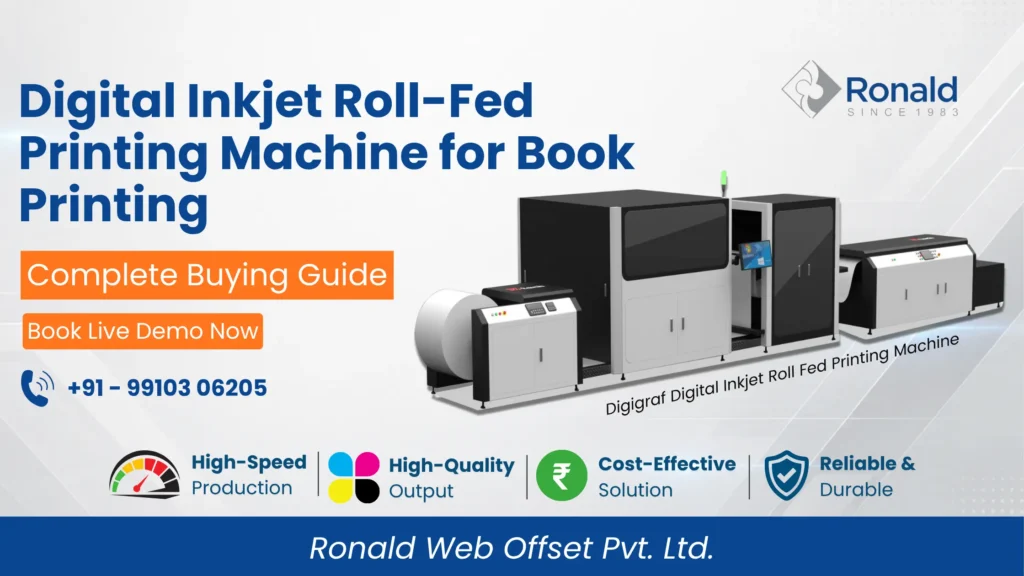
A Digital Inkjet Roll Fed Printing Machine for Book Printing can help publishers and commercial printers achieve fast, flexible, and efficient book production. It combines continuous paper feeding with digital inkjet technology to support modern publishing requirements.
In the past, publishers printed most books in enormous quantities. Today’s market has changed significantly. Publishers may need small runs, medium runs, revised editions, or books printed only when customers place an order.
A Digital Inkjet Roll Fed Printing Machine for Book Printing can help meet these needs. It combines continuous paper feeding with digital inkjet technology. This allows printers to produce books with greater flexibility and faster job changes.
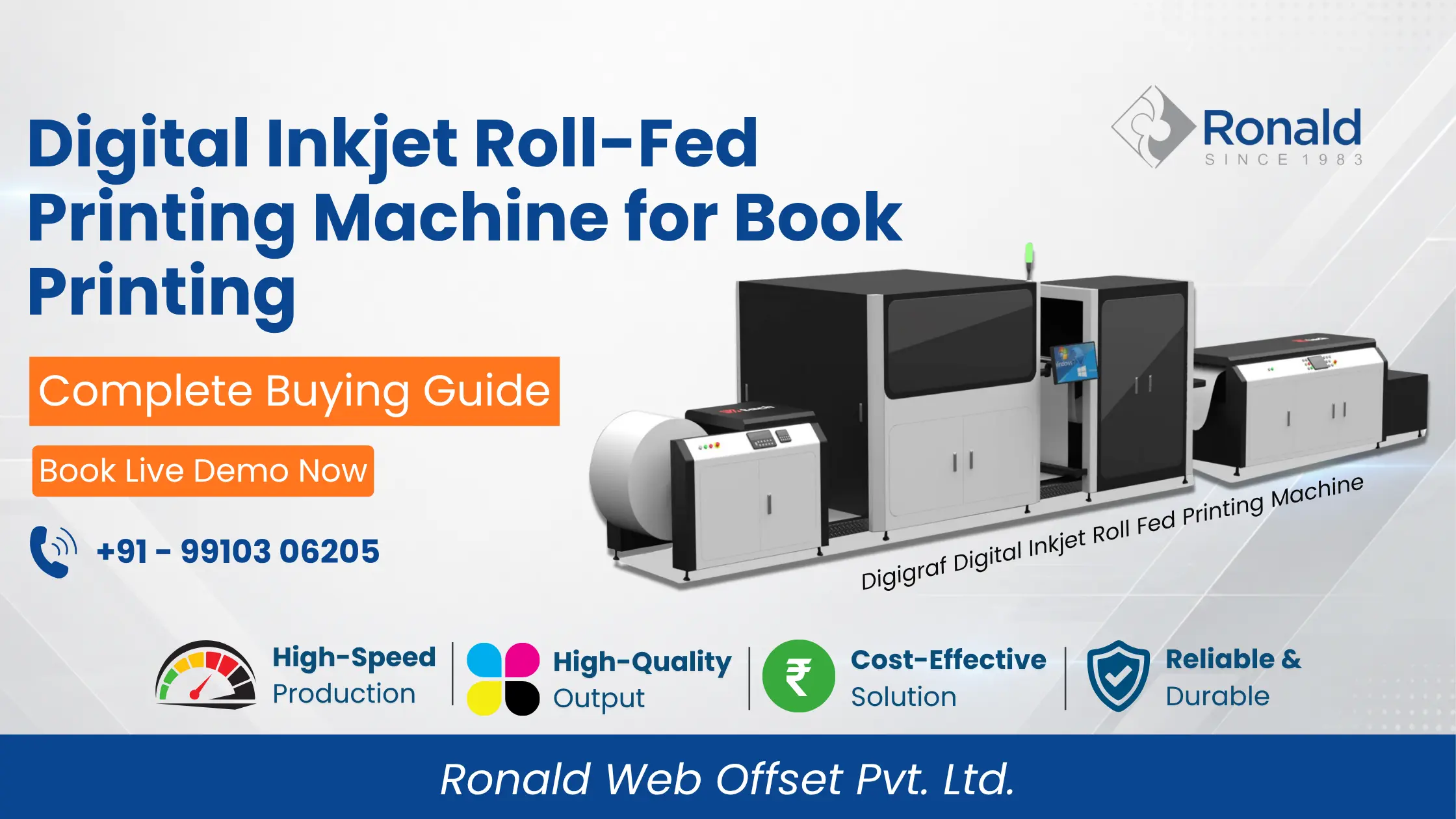
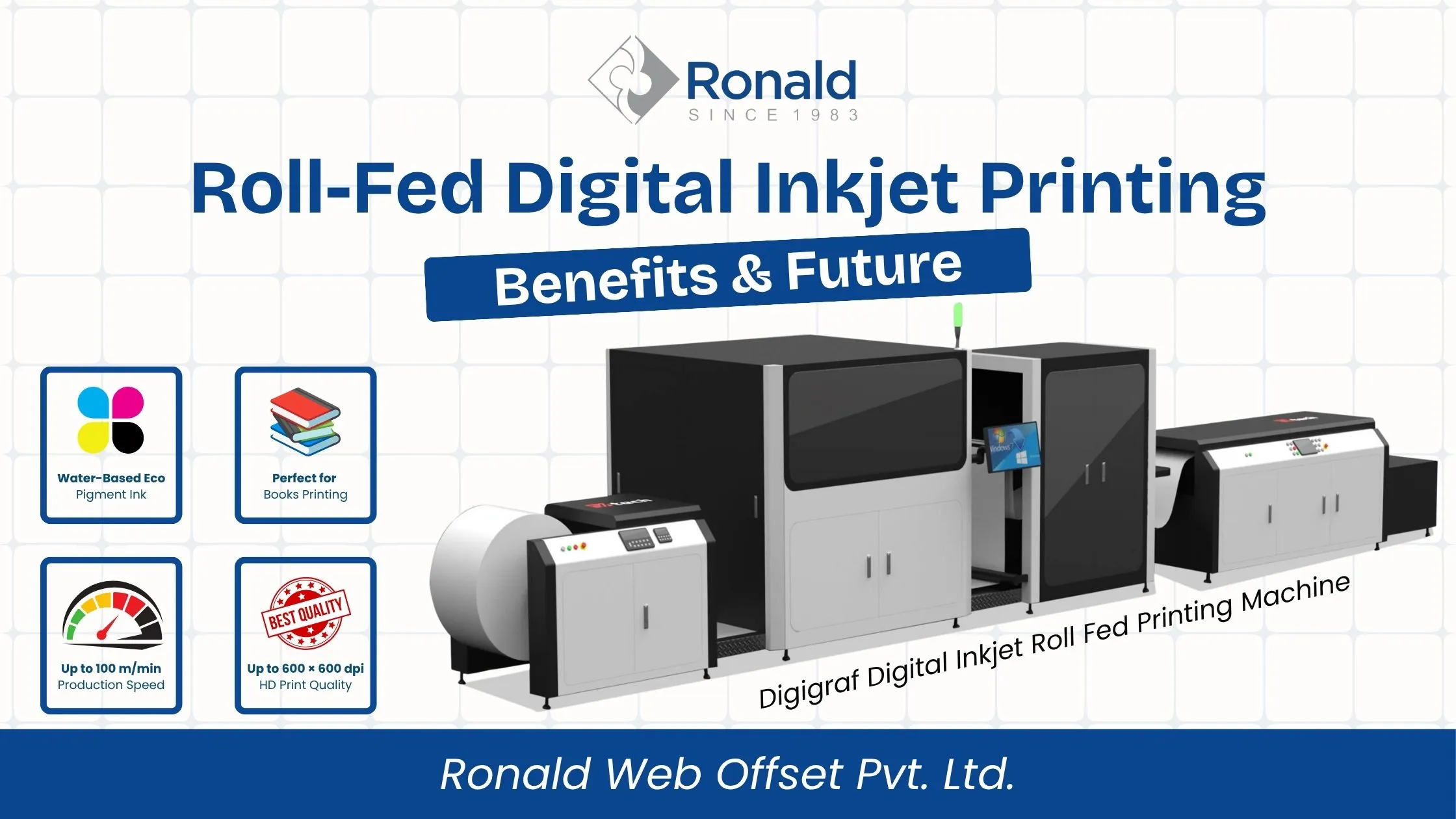
The Digigraf digital inkjet roll-fed printing machine serves modern print businesses. It helps them run efficient and flexible digital production.
In this guide, we explain how roll-fed digital inkjet printing works. We highlight its benefits. We also describe how you can use it for book printing.
A digital inkjet roll fed printing machine prints on a continuous roll of paper instead of separate sheets.
The paper moves through the machine as a continuous web. Digital printheads apply ink directly to the paper based on the digital print file.
This creates a smooth and efficient printing process.
Unlike traditional printing methods, digital inkjet printing does not require conventional printing plates for each job. Digital processing handles the print file and then sends it to the machine.
For book printing, this can make production more flexible.
A printer can manage different book titles and change jobs more easily.
The process starts with a roll of paper.
The paper moves continuously through the printing system. At the same time, the digital printing system receives the required print data.
The inkjet printheads print the text and images directly onto the moving paper.
After printing, the paper can move through other production steps. These may include drying, cutting, folding, and finishing.
The exact process depends on the production setup.
For book printers, the main benefit is continuous production combined with digital control.
This can help create a faster and more organized workflow.
Book publishers do not always need the same number of copies.
One book may require thousands of copies. Another may need only a smaller quantity. Some books may also need regular updates.
A Digital Inkjet Roll Fed Printing Machine for Book Printing can help printers manage these changing needs.
Roll-fed machines use paper supplied from large rolls.
This allows the printing process to continue without repeatedly loading individual sheets.
Continuous paper movement can help support efficient production.
This is useful for printing companies handling a large number of books or other publishing products.
Digital printing offers greater flexibility when production quantities change.
A printer can produce different book quantities based on current requirements.
This can be useful for:
This flexibility is important in today’s publishing market.
Book printers often handle many different titles.
A digital workflow lets you change production files more easily.
This can reduce the time required to move from one job to another.
As a result, printers can manage multiple book titles more efficiently.
A Digital Book Printing Machine can offer several benefits to publishers and commercial printers.
The benefits go beyond printing speed.
They can also improve the overall production workflow.
Publishers often work with strict deadlines.
Schools may require educational books before the start of a new academic year. Technical books may need fast updates.
Digital workflows can help reduce the time between receiving a final file and starting production.
This can help printing companies respond faster to customer requirements.
Print-on-demand is becoming more popular in the book industry.
Instead of printing a large number of books and storing them, publishers can print according to demand.
This can reduce unnecessary inventory.
Digital inkjet technology supports this type of flexible production.
It can be useful for publishers that manage many titles with different demand levels.
Large print runs can create excess inventory.
Unsold books need storage space. A new edition can also make them outdated.
Flexible production can help reduce this problem.
Publishers can produce books closer to their actual demand.
This may reduce excess stock and storage requirements.
Books frequently require revisions.
Educational books may require new content. Technical books may need updated information.
Digital printing makes it easier to manage new files and updated editions.
This gives publishers more control over future production.
Digital inkjet technology can be used for different types of book printing.
Educational publishing requires regular updates.
Schools and institutions may need new editions or revised learning material.
Digital printing can provide more flexibility for these changing requirements.
It can support different production quantities based on demand.
Academic and technical books often serve a specific audience.
These books may not always require massive print runs.
Digital printing can help publishers manage specialized titles more efficiently.
It can also make updated editions easier to produce.
Print-on-demand is one of the important applications of digital printing.
Producers can make books based on current customer demand.
This can be useful for niche titles and backlist books.
It can also help publishers avoid printing more copies than they need.
Demand for commercial books can change quickly.
A popular book may require more copies, while another title may need only a small reprint.
Digital production can help printers respond to these different requirements.
Digital and traditional printing both have their own advantages.
The right option depends on the job.
Traditional printing can be a strong option for **massive** and stable print runs.
Widely used for high-volume book production.
When printers produce a large quantity of the same book, traditional printing can be an efficient choice.
Digital inkjet printing provides more flexibility.
It can be useful when printers need:
For many printing businesses, the best option depends on the specific production requirement.
Choosing the right printing machine is an important decision.
Printing companies should first understand their production needs.
Review your present printing output volume.
Also consider future business growth.
Think about the average number of books produced in each job.
A company that prints many titles may need a different solution.
A company that prints one high-volume title may need another solution.
Print quality is important for every book.
Text should be clear and easy to read.
Images should also meet the required quality level.
Before choosing a machine, printers should check print samples based on their actual applications.
Different books use different types of paper.
The printing machine should be suitable for the paper requirements of the target application.
Paper can affect print quality and finishing results.
Therefore, paper compatibility should be part of the evaluation process.
Printing is only one part of book production.
Other steps may include:
A well-planned workflow can help improve overall production efficiency.
The Digigraf Digital Inkjet Roll Fed Printing Machine is a modern digital option for continuous book production. It suits printing businesses.
Roll-fed digital technology combines continuous paper handling with the flexibility of digital printing.
This can be useful for printers handling different book titles and changing production requirements.
Before choosing any machine, businesses should evaluate their specific needs.
Important factors include production volume, print quality, paper requirements, finishing workflow, and future growth.
The right solution should support both current production needs and long-term business goals.
The book publishing industry is moving toward more flexible production.
Publishers want faster delivery and better control over inventory.
Print-on-demand is also creating new opportunities.
Digital printing technology can support these changes.
As automation and digital workflows continue to develop, book production may become even more flexible and efficient.
A digital inkjet roll-fed printing machine for book printing can be crucial. It can help in this changing production environment.
It gives printers the ability to combine continuous production with digital workflow flexibility.
A Digital Inkjet Roll Fed Printing Machine for Book Printing can be a valuable solution for modern publishers. It can also help commercial printers.
It can support flexible print quantities, faster job changes, continuous production, and print-on-demand applications.
Publishers can use the technology for educational books, academic publications, technical manuals, commercial books, and other publishing applications.
The Digigraf Digital Inkjet Roll Fed Printing Machine supports printing businesses that want a more flexible digital workflow.
However, pick the right printing solution for your needs. Consider your production volume.
Think about the print quality you need. Make sure it works with your paper. Also, consider the entire finishing workflow.
As the publishing industry continues to change, flexible digital production will become increasingly important for printers and publishers.
A printing system uses continuous rolls of paper and digital inkjet technology to print books and other publishing materials.
Yes. It can suit many book printing needs, especially when you need flexible quantities, many titles, and faster job changes.
Yes. Digital printing can support print-on-demand production because books can be printed according to current demand.
You can use it for educational, academic, and technical books. It also works for commercial and print-on-demand titles, based on production needs.
Important factors include production volume, print quality, paper compatibility, workflow requirements, finishing options, and future business growth.
Sheet Fed Inkjet Press: Technology, Benefits & Applications The printing industry is changing rapidly as businesses look for faster, more...
Best Digital Printing Machine for Short-Run Book Printing in India Digital printing machine for short-run books in India can help...
Digital Inkjet Roll Fed Printing for Book Printing A Digital Inkjet Roll Fed Printing Machine for Book Printing can help...
Roll-Fed Digital Inkjet Printing: Benefits & Future Introduction The printing industry is changing fast. Customers want better quality, faster delivery,...
Get a free consultation, product brochure, technical specifications, and the best price quote from our experts.
info@ronaldweboffset.com