How Duplex Printing Technology Works in Modern Machines Introduction Producing documents on both sides of a sheet is common in...
November 4, 2026
Producing documents on both sides of a sheet is common in the modern printing industry. People call this process duplex printing. People widely use it for books, educational materials, manuals, and business documents.
Modern machines use automated systems to turn sheets during production. This reduces manual work and helps maintain a smooth workflow.
This guide explains the working process, different mechanisms and important factors that influence double-sided production.
Duplex Printing Technology allows a machine to produce content on both sides of a single sheet of paper.
Two common methods are:
Simplex Printing: This method places content on one side of the sheet. People also call it single-sided printing.
Duplex Printing: This method produces content on both sides. People also call it double-sided printing.
Simplex printing is suitable for posters and single-sided documents. Duplex systems are more useful for books, manuals and educational publications.
They also help businesses reduce paper consumption by using both sides of each sheet.
An automatic duplex printing machine uses several steps to complete a double-sided job.
The process starts when individual sheets enter the machine. Depending on its design, the feeder may use vacuum suction or friction-based feeding.
A stable feeding system helps prevent paper jams and incorrect sheet positioning.
The sheet moves towards the print engine. The machine transfers the required text, images and graphics onto the first side.
In digital inkjet systems, printheads deposit tiny ink droplets onto the paper. These droplets create the required image or text.
After the first side is complete, the sheet moves towards the duplex unit.
This mechanism changes the sheet’s orientation. It then presents the opposite side for the next operation.
The machine positions the sheet for reverse-side printing. The print engine then produces the remaining content.
Correct positioning helps maintain alignment between both sides.
After both sides are complete, the sheets move towards the delivery section.
They can then proceed to folding, binding and other finishing operations.
Different machines use different arrangements to turn paper. The design depends on the equipment and production requirements.
This system uses rollers and paper guides to change the direction of a sheet. It then sends the sheet towards the print engine again.
Some industrial machines use a dedicated mechanical unit to turn individual sheets. This arrangement helps control sheet movement during the process.
A V-shaped mechanism uses a specially designed paper path.
The sheet follows a V-shaped route during the turning operation. This changes its orientation before the next printing stage.
Different manufacturers may use different designs based on their machine architecture.
Paper registration means maintaining the correct position of a sheet during production.
Producing content on both sides is especially important. Text and images should maintain their intended alignment.
Poor registration can affect page margins and image placement. It can also reduce the quality of a finished book.
Consider these important factors:
These factors help businesses evaluate the duplex capabilities of industrial equipment.
Duplex technology offers several practical benefits for professional printing businesses.
Using both sides of a sheet reduces the number of sheets needed for double-sided documents. This can improve material use.
Fewer sheets can mean lower paper expenses. Actual savings depend on job size, paper type and production requirements.
Automatic duplex systems reduce the need for operators to turn sheets by hand. This helps simplify daily operations.
Lower paper consumption can help reduce waste. It also supports better use of natural resources and may reduce the environmental impact associated with paper production.
Books require content on both sides of their pages. Duplex technology helps manage this requirement through automated sheet handling.
Selecting suitable equipment requires more than checking its maximum production speed.
Here are six important factors to consider.
1. Paper Feeding System
Check how the machine handles individual sheets. Consistent feeding helps maintain a stable workflow.
2. Duplex Capabilities
Understand how the equipment turns each sheet. The mechanism should match your production needs.
3. Front-to-Back Registration
Verify that both sides align properly. Always review actual production samples before making a decision.
4. Output Quality
Review resolution, printhead technology and image consistency. These factors influence the final result.
5. Paper Support
Check supported sizes, GSM range and media types. Different paper characteristics can affect machine performance.
6. Production Requirements
Consider your daily workload and expected volume. Select equipment that matches your business requirements.
Digital inkjet technology has created new opportunities for professional printing businesses.
These machines produce content directly from digital files. Specialised printheads transfer ink onto the sheet without requiring traditional printing plates.
When combined with automatic duplex capabilities, these systems can support double-sided production with less manual handling.
However, the print engine is only one part of the complete machine. Paper feeding, sheet turning and registration also matter.
All these systems must work together to maintain consistent output.
This combination is particularly relevant to book publishers and businesses handling different production volumes.
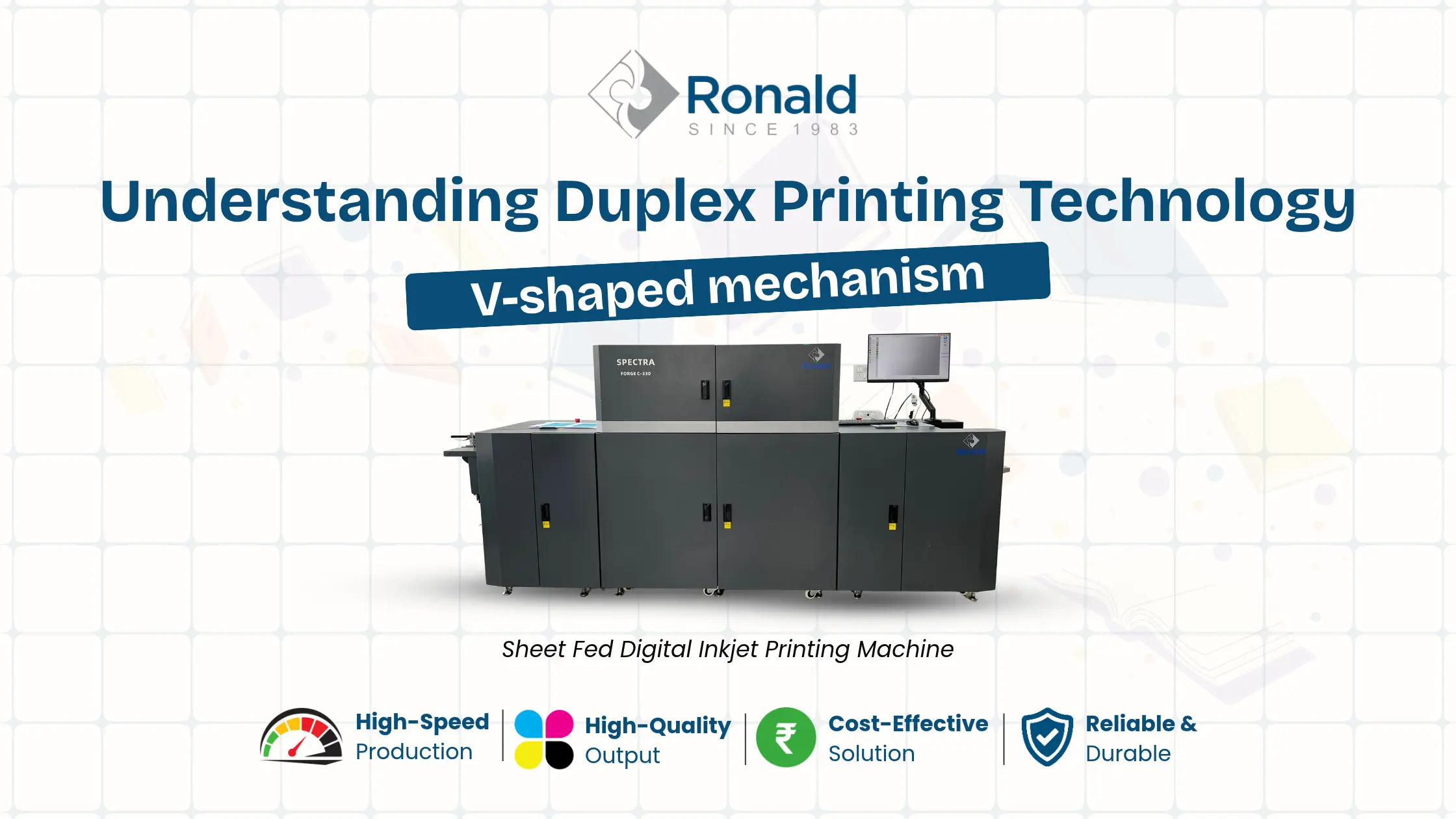
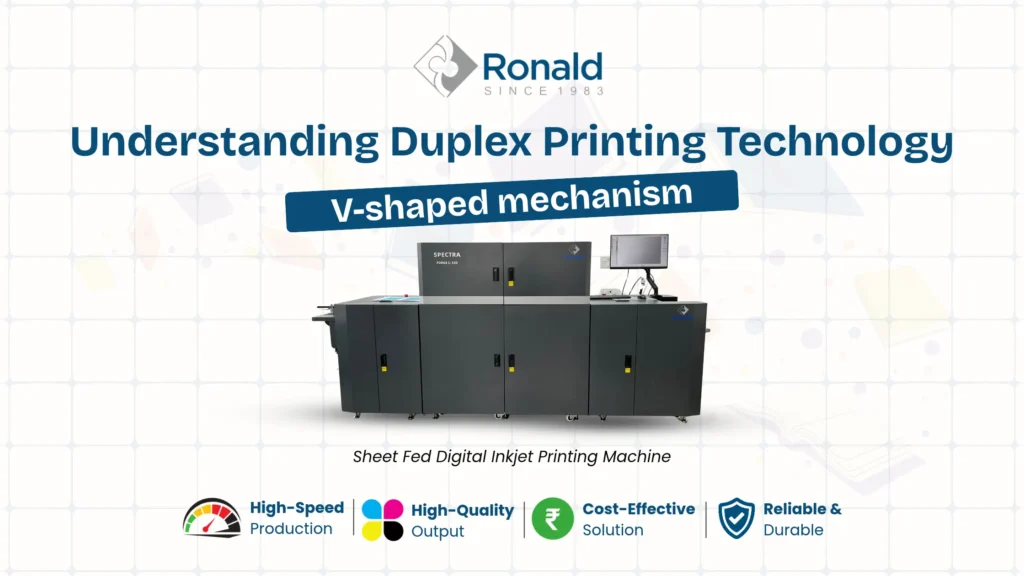
Ronald Web Offset Pvt. Ltd. offers the Spectra Forge sheet-fed digital inkjet printing machine.
Designers created it for book printing and letterhead production.
One of its key features is its patented V-shaped duplex paper-flipping mechanism.
This specialised arrangement changes sheet orientation during the production process. It helps manage the transition between first-side and reverse-side operations.
The machine combines paper feeding, inkjet technology and sheet handling within its production workflow.
For businesses exploring modern digital inkjet solutions, understanding this mechanism is an important part of evaluating the machine.
Duplex Printing Technology plays an important role in modern book production. It allows machines to handle both sides of a sheet through coordinated paper movement and turning mechanisms.
Businesses should consider feeding systems, registration, output quality and media support before selecting equipment.
Modern digital inkjet solutions combine these features to support professional production requirements.
With its patented V-shaped duplex paper-flipping mechanism, Spectra Forge reflects Ronald Web Offset Pvt. Ltd.’s approach to modern sheet-fed digital technology.
The process produces content printed on both sides of a single sheet of paper.
Simplex printing produces content on only one side of a sheet. People also call it single-sided printing.
The machine prints the first side, turns the sheet, and presents the opposite side for the next operation.
Yes. Using both sides can reduce the number of sheets required for double-sided documents.
People commonly use it in book production, educational materials, manuals, and business documents.
A patented paper-flipping arrangement changes sheet orientation during double-sided production.
Check paper feeding, turning mechanisms, registration, output quality and supported media specifications.
Ronald Web Offset Pvt. Ltd. develops printing machinery for the evolving requirements of the printing industry.
Explore Spectra Forge – Sheet-Fed Digital Inkjet Printing Machine.
How Duplex Printing Technology Works in Modern Machines Introduction Producing documents on both sides of a sheet is common in...
How Roll-Fed Inkjet Technology Supports Changing Print Demands The printing industry is changing with time. Customer needs are different, and...
What All in Print China 2026 Means for Digital Printing The printing industry is changing as businesses look for better...
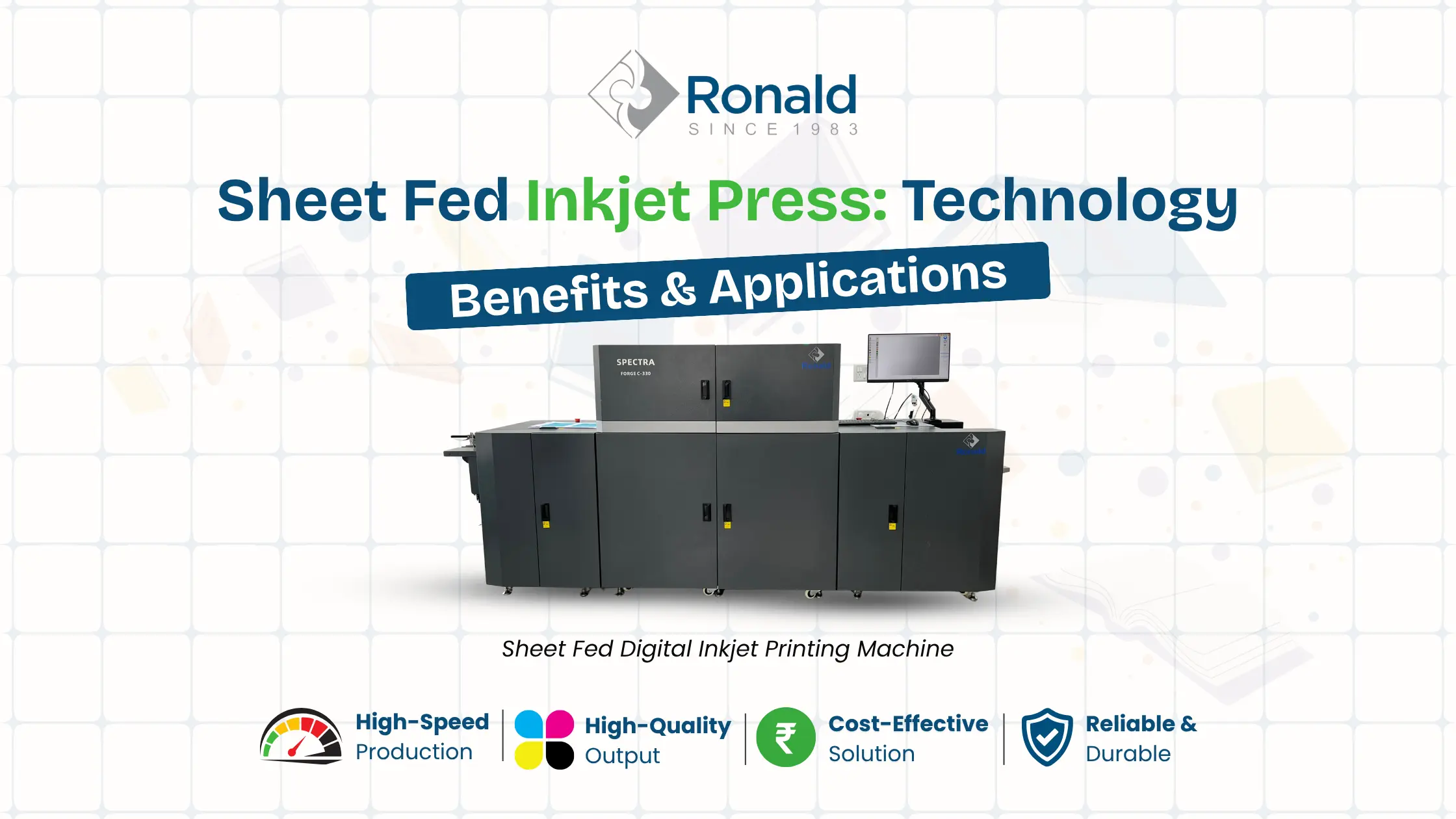
Sheet Fed Inkjet Press: Technology, Benefits & Applications The printing industry is changing rapidly as businesses look for faster, more...
Get a free consultation, product brochure, technical specifications, and the best price quote from our experts.
info@ronaldweboffset.com